Problem
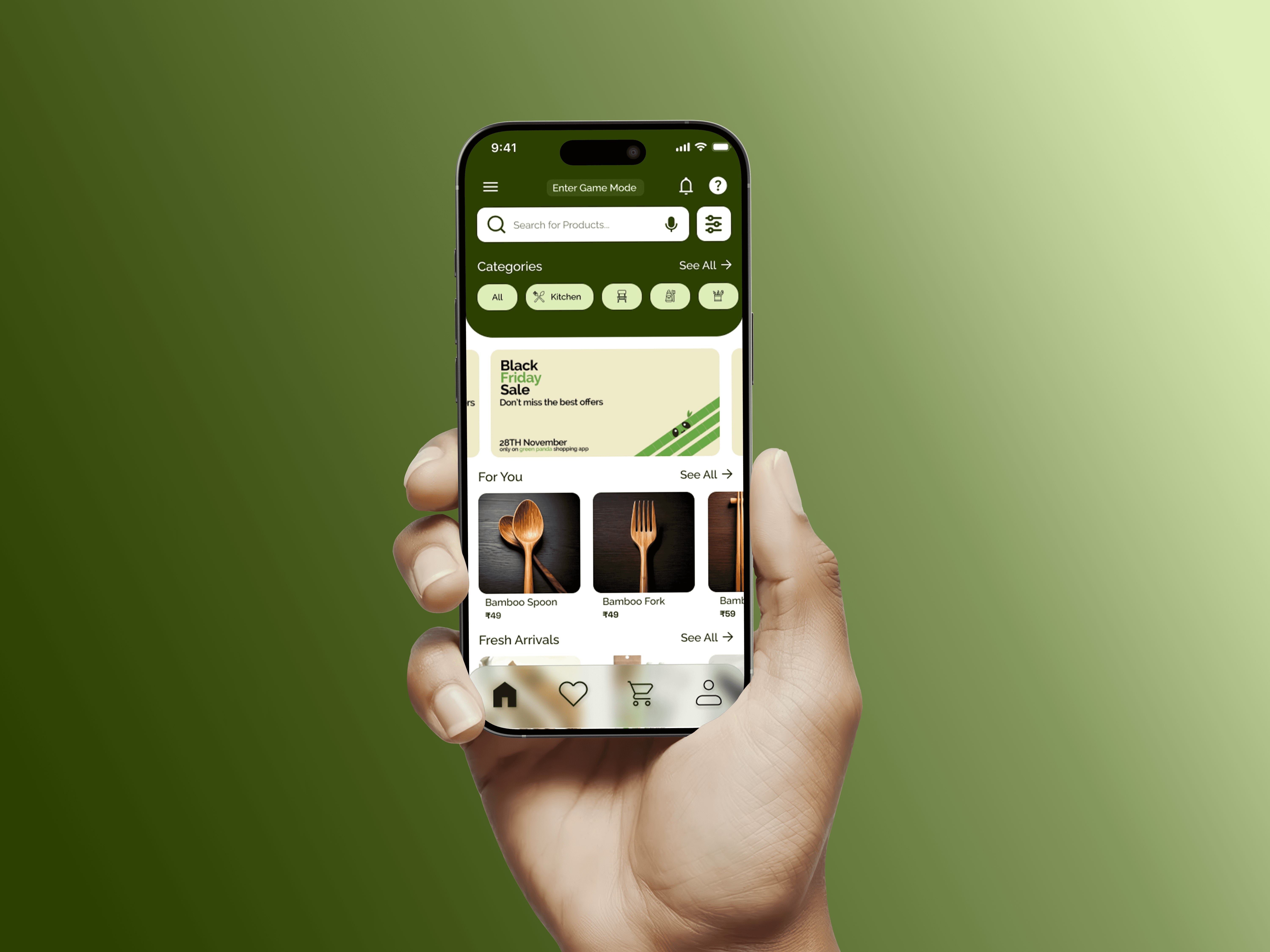
Consumers want to shop sustainably,
but there’s friction: higher cost, low awareness, and no emotional incentive. The experience needs motivation, not just information.
User Insights
Most people say they want to shop sustainably, but they rarely change their habits. The issue wasn’t awareness, it was motivation. Sustainable choices have delayed and invisible rewards, while regular shopping feels instant, convenient, and effortless.
Users weren’t looking for reminders or guilt-based messaging. They needed something that made sustainable behavior feel immediately rewarding and personally meaningful.
This insight guided the core experience:
turn sustainable actions into visible progress.
How This Insight Shaped the Product
Sustainable choices earn points, badges, and streaks
Progress is shown visually through levels, stats, and milestones
Challenges and leaderboards introduce friendly competition
Real-world impact is shown in simple language (ex: “2kg waste diverted”)
The experience reframes sustainability from a moral decision into a reward-based habit loop, making it easier for users to build long-term behavior without feeling forced.
Design Strategy
Designed around a behavioral loop:
Act → Earn → Progress → Repeat.
The goal was to nudge users into sustainable habits using gamification and visible environmental impact.
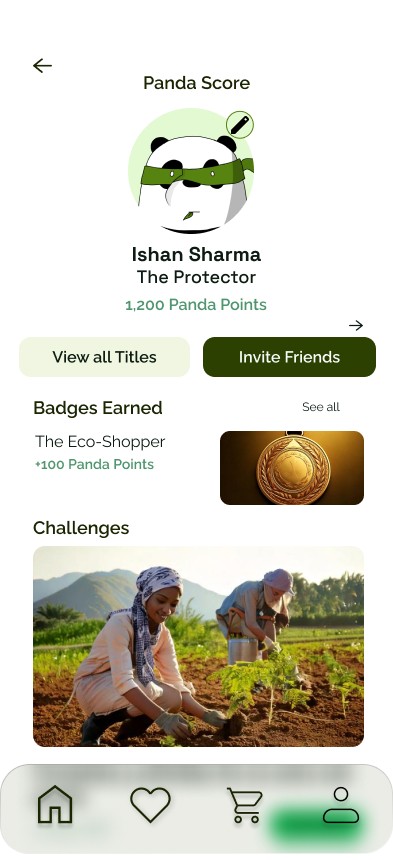
Impact Tracking through Panda Scores
What It Is? : Real-time stats showing users their total environmental contribution (e.g., CO₂ saved, plastic reduced).
Why It Matters? : Reinforces the impact of users' actions, fostering a sense of accomplishment.
Core UX Concepts
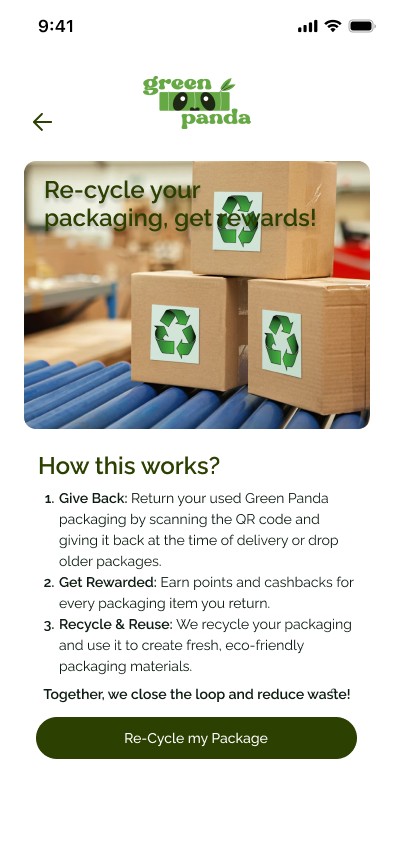
Return-Recycle Program: Users can scan and return packaging to earn points. It creates a closed-loop system connecting shopping behavior with environmental responsibility.
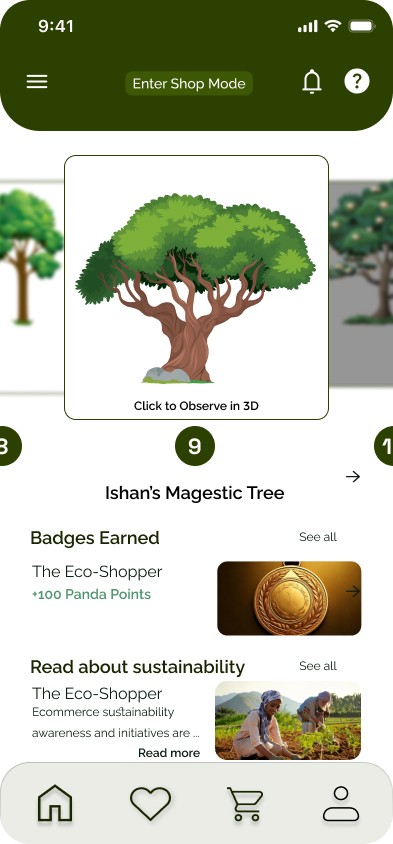
Gamification Layer: Progress badges, challenges, leaderboards, and score tracking make sustainability a measurable habit rather than a moral request.
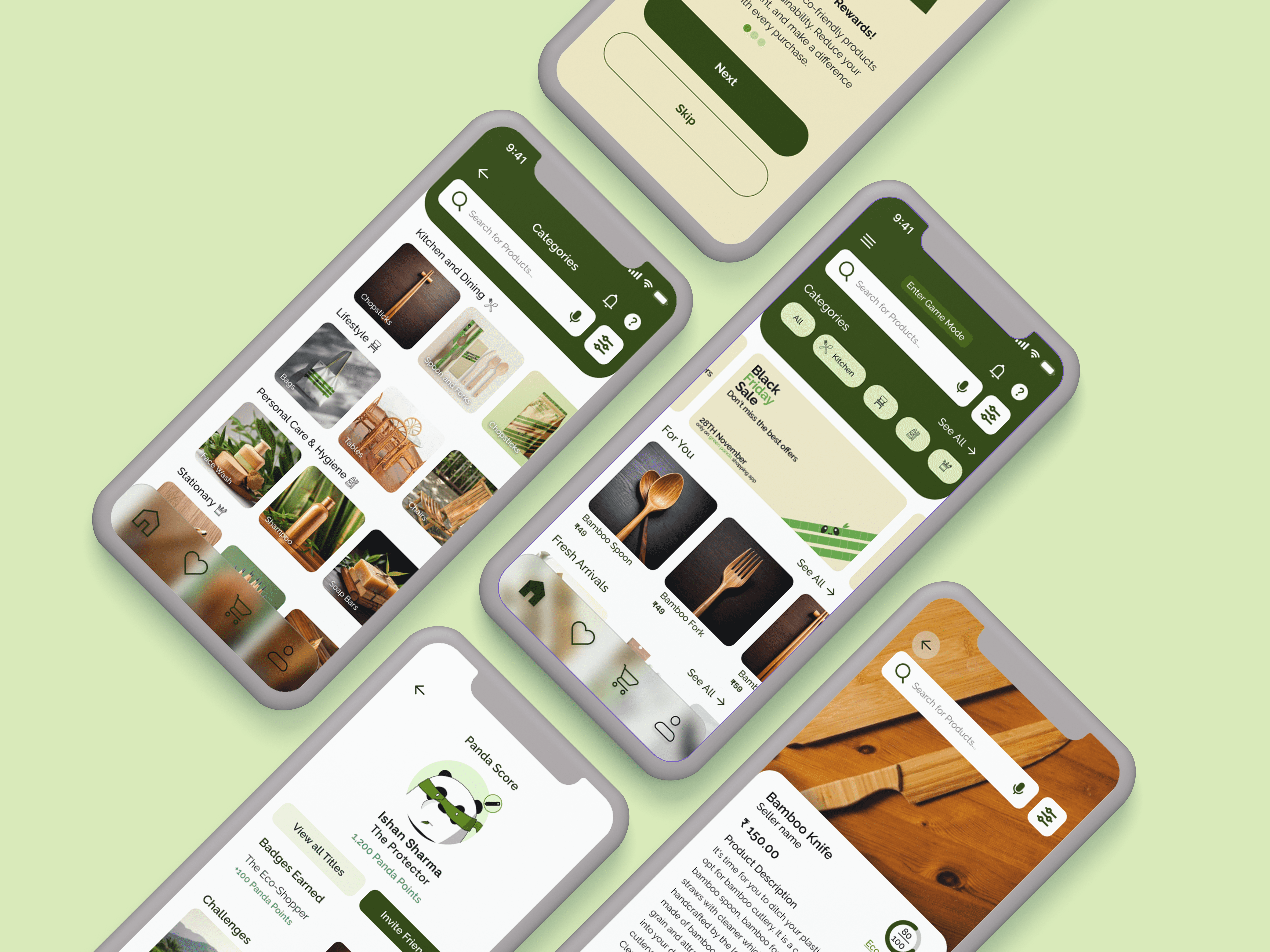
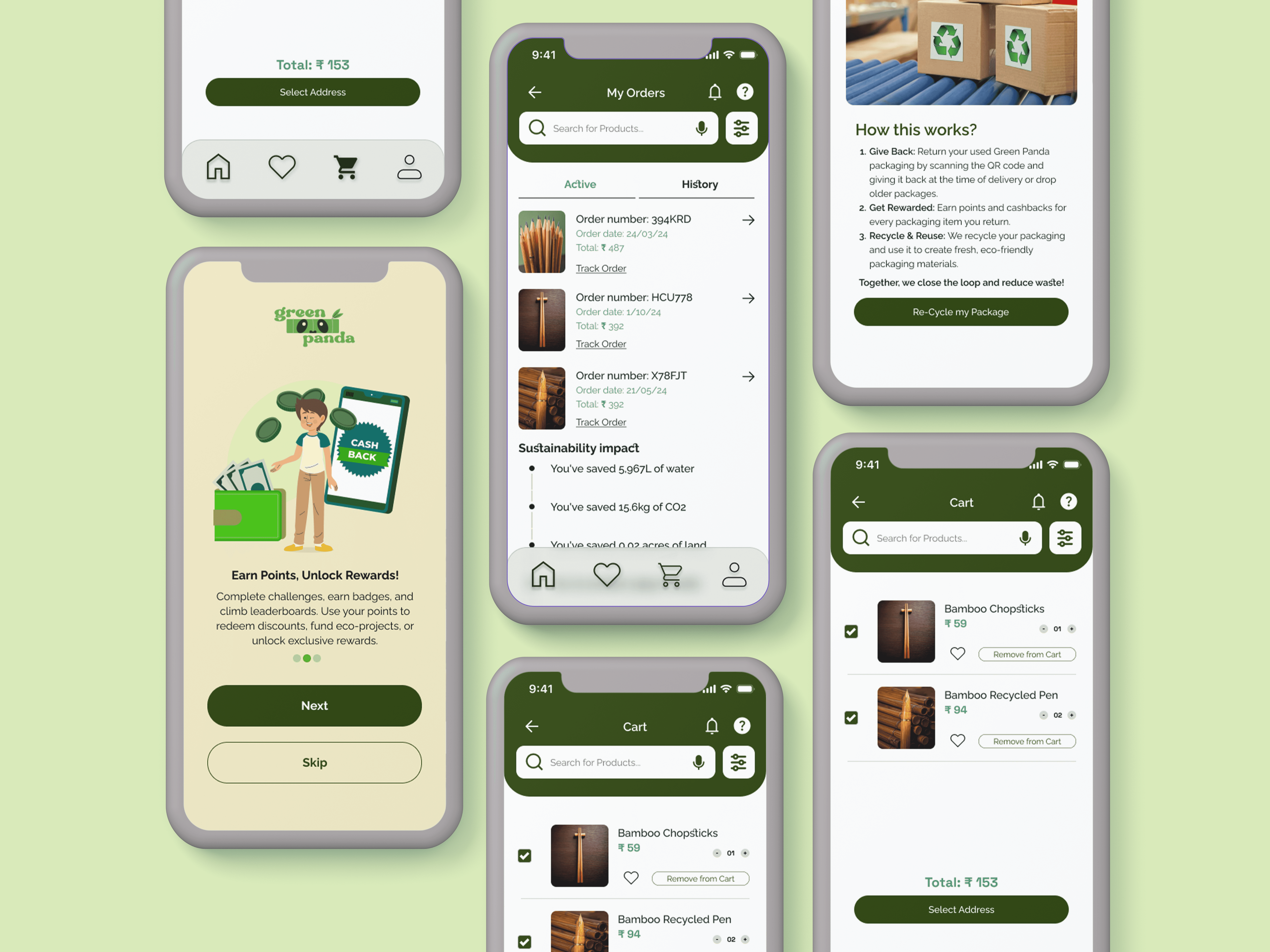
The platform converts passive eco-intent into active participation using reward mechanics and environmental feedback.
Key outcomes:
Sustainable behavior tied to real-world incentives
Gamification makes habit-building enjoyable
Information architecture reduces overwhelm